
Walk into most homes today, and you’ll find overstuffed closets, cluttered countertops, and rooms packed with possessions that seemed essential at purchase but now just take up space. The average American household contains over 300,000 items, yet studies show we use only about 20% of what we own regularly. This abundance doesn’t bring happiness—it creates stress, wastes time, drains finances, and paradoxically makes it harder to find the things we actually need and love. Minimalist living offers an elegant solution: how to simplify your life by intentionally curating what you own, do, and commit to, keeping only what adds genuine value while eliminating the excess that weighs you down. But here’s what many minimalism guides get wrong—simplification doesn’t mean living in stark, sterile spaces devoid of personality or beauty. True minimalism is about creating room for what matters by removing what doesn’t, designing spaces that feel both calming and distinctly yours, and building a lifestyle rich in experiences rather than possessions. This comprehensive guide explores practical strategies for embracing minimalist principles without sacrificing the style, comfort, or personal expression that makes a house feel like home and a life feel fully lived.
Understanding What Minimalism Actually Means
Before diving into how to simplify your life through minimalist practices, let’s clarify what minimalism is—and crucially, what it isn’t.
Beyond the Aesthetic Stereotype
When most people picture minimalism, they imagine all-white interiors, empty rooms, and living with exactly 100 possessions. That’s one interpretation, but it’s far from the only—or best—approach. Minimalism is fundamentally about intentionality: consciously choosing what you allow into your life rather than accumulating by default.
True minimalism looks different for everyone. A minimalist family of five will own more than a minimalist single person. A minimalist artist needs supplies that a minimalist accountant doesn’t. Someone who genuinely loves and uses their extensive book collection isn’t less minimalist than someone who owns three novels—what matters is whether those books add value or just take up space.
The essence of minimalism is eliminating the non-essential so the essential can flourish. This applies to physical possessions, commitments, relationships, digital clutter, mental noise, and how you spend your time and attention.
The Real Benefits of Simplification
Why bother learning how to simplify your life? The benefits extend far beyond having tidier closets:
- Mental clarity and reduced stress: Clutter competes for your attention, creating low-grade anxiety. Simplified spaces produce measurably lower cortisol levels and improved focus.
- Time freedom: The average person spends 2.5 days annually looking for misplaced items. Less stuff means less organizing, cleaning, maintaining, and searching. That time becomes available for what actually matters to you.
- Financial liberation: Breaking the acquisition cycle frees money for experiences, investments, or financial security. Most minimalists report spending significantly less while feeling wealthier.
- Environmental impact: Consuming less reduces your ecological footprint. Manufacturing, transporting, and disposing of all those possessions carries enormous environmental costs.
- Identity clarity: When you stop defining yourself through possessions, you develop stronger sense of who you actually are beyond what you own, wear, or display.
- Enhanced appreciation: Owning fewer things of higher quality that you truly love creates more satisfaction than owning many mediocre things you’re indifferent to.
Minimalism Isn’t Deprivation
The biggest misconception about minimalism is that it requires suffering, sacrifice, or living without things that bring joy. Nothing could be further from the truth. Minimalism is about adding value to your life by subtracting what doesn’t serve you. It’s not about living with less—it’s about living with just enough of what matters.
You’re not striving for some arbitrary number of possessions or adherence to someone else’s rules. You’re creating space—physical, mental, temporal, and financial—for what you genuinely value. That might mean keeping your grandmother’s china but donating trendy decor you never liked. It might mean owning quality outdoor gear for your hiking passion while maintaining a minimal wardrobe. The point is intentionality, not deprivation.
Where to Start: The Minimalist Foundation?
Understanding how to simplify your life in practice requires starting with concrete actions that build momentum and demonstrate benefits quickly.
The Mindset Shift Comes First
Before touching a single possession, examine your relationship with stuff. Most accumulation stems from deeper patterns: using shopping as therapy, keeping things “just in case,” holding onto guilt gifts, or defining success through material display.
Spend a week noticing these patterns without judgment. When do you feel the urge to buy? What emotions drive it? What stories do you tell yourself about possessions (“I might need this someday,” “I paid good money for that,” “What if I regret donating it”)?
Awareness precedes change. Once you recognize these patterns, you can address them consciously rather than unconsciously perpetuating cycles of accumulation and purging.
Start Small and Build Momentum
The prospect of simplifying an entire life feels overwhelming. Instead, start with one drawer, one shelf, or one category of items. This micro-commitment creates quick wins that build confidence and motivation for larger projects.
Pick something that won’t cause decision paralysis—maybe your sock drawer, expired pantry items, or old magazines. Experience the satisfaction of a completely sorted, simplified space. That feeling becomes fuel for tackling harder areas.
As you progress through small projects, you’ll develop decision-making muscles. Early decluttering sessions might take hours per category. Within weeks, you’ll evaluate items in seconds because you’ve clarified your criteria for what stays and what goes.
The Core Questions
When evaluating any possession, commitment, or activity, ask:
- Does this add value to my life? Not “might it someday” or “did it once,” but does it currently, actually contribute to your wellbeing, goals, or joy?
- Do I use this regularly? Be honest about actual usage, not hypothetical or guilt-based justifications.
- Would I buy this again today? The money’s already spent. Would you choose to spend it on this item now, knowing what you know?
- Does this align with who I am now? We change. Possessions and commitments from previous life phases may no longer fit current values and goals.
- Does it spark joy? Marie Kondo popularized this question. While not the only criterion, genuine emotional resonance matters for items you’ll live with daily.
- What’s the true cost? Consider not just purchase price but maintenance time, space occupied, mental energy, and opportunity cost of alternatives.
strategies to manage daily stress
Decluttering with Style: Keeping What You Love

Learning how to simplify your life doesn’t mean eliminating beauty or personality from your spaces. Here’s how to declutter while maintaining—even enhancing—your aesthetic.
Quality Over Quantity
The minimalist approach to style emphasizes having fewer items of significantly higher quality rather than many mediocre possessions. This applies to everything from furniture and clothing to kitchen tools and electronics.
One beautiful, well-made wooden cutting board that you love using beats a drawer full of plastic ones you tolerate. A single piece of artwork that genuinely moves you creates more visual impact than a gallery wall of prints you’re indifferent to. Your favorite jeans that fit perfectly and make you feel great are worth keeping even if you wear them constantly, while ten pairs that are “just okay” can go.
This quality-over-quantity approach paradoxically saves money long-term. Quality items last longer, perform better, and eliminate the need for frequent replacement that budget alternatives require.
Create Focal Points
Minimalist spaces aren’t empty voids—they’re carefully curated environments where each element has room to breathe and make an impact. Instead of filling every surface, create intentional focal points that draw the eye and express your style.
Maybe it’s a stunning piece of furniture, an impressive plant, architectural lighting, or a curated bookshelf. With less visual competition, these statement pieces create stronger impressions than they could in cluttered environments.
This approach to how to simplify your life aesthetically means being more selective and intentional, not less stylish. Your personal style becomes clearer and more impactful when it’s not diluted across dozens of competing elements.
The One In, One Out Rule
Once you’ve simplified to a level you’re happy with, maintain it through the one-in-one-out principle. When you acquire something new, something existing leaves. This prevents re-accumulation while ensuring that new additions genuinely add value rather than just filling space.
This rule forces intentionality. Before buying something new, you must identify what it’s replacing. If you can’t find anything worth replacing, you probably don’t need the new item either. This simple practice dramatically reduces impulsive purchases and keeps possessions at a sustainable level.
Seasonal Rotation
If you live somewhere with distinct seasons, consider rotating seasonal items rather than keeping everything accessible year-round. Winter coats in summer and beach gear in winter just clutter spaces when they’re not needed.
Store off-season items properly (clean, protected, labeled) in less accessible areas. This keeps daily-access spaces minimal while preserving what you’ll genuinely need later. The rotation process also provides natural opportunities to reassess whether items are still worth keeping.
Building minimalist habits requires consistent daily practices that reinforce intentional living without demanding hours of effort. Our 10-minute lessons for personal growth provide bite-sized daily practices focused on mindful consumption, decision-making frameworks, and the psychology of simplification—helping you develop the mental patterns that sustain minimalist living long after the initial decluttering excitement fades, with practical exercises that fit seamlessly into busy schedules while creating lasting transformation.
Room-by-Room Simplification Strategies
Different spaces serve different purposes and require tailored approaches to how to simplify your life effectively.
Living Areas: Function Meets Aesthetics
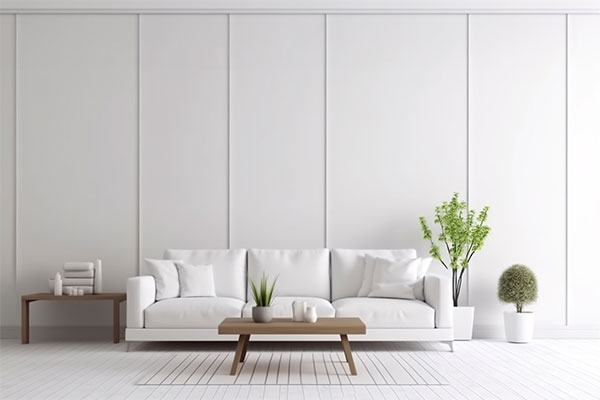
Living rooms, family rooms, and common areas benefit enormously from minimalist approaches because they’re where you spend significant time and where visual clutter most impacts daily stress levels.
- Start with surfaces: Clear coffee tables, end tables, and mantels completely. Add back only items that serve specific purposes or bring genuine joy—maybe a beautiful bowl, a single plant, or a few cherished books. Empty surfaces create visual calm that cluttered ones never can.
- Furniture assessment: Do you actually use all those chairs, side tables, and decorative pieces? Living areas often accumulate furniture “just because,” creating cramped, cluttered feelings. Remove pieces that don’t serve clear purposes. The remaining furniture can breathe, and the room feels more spacious.
- Media organization: Entertainment centers often become dumping grounds for DVDs, cables, controllers, and random electronics. Digitize what you can, donate media you never use, organize what remains in closed storage, and deal with cable chaos through simple management systems.
- The three-item rule: Limit decorative items on any surface to three or fewer pieces. This creates visual interest without clutter. Rotate items seasonally if you want variety without constant accumulation.
Bedrooms: Creating Sanctuary Spaces
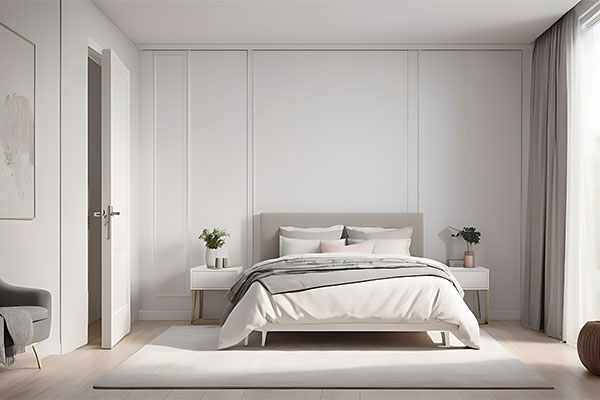
Bedrooms should be restful sanctuaries, yet they often become storage overflow areas. Minimalist bedroom principles dramatically improve sleep quality and mental wellbeing.
- Wardrobe simplification: Most people wear 20% of their clothes 80% of the time. The capsule wardrobe concept—curating a smaller collection of versatile, high-quality pieces you actually love—simplifies getting dressed while improving your style.
- Remove everything that doesn’t fit, you don’t love, or isn’t appropriate for your current lifestyle. Be ruthless about aspirational items you never wear. What remains should make you feel confident and comfortable.
- Nightstand clarity: Limit nightstands to essentials—maybe a lamp, current book, and glass of water. Everything else creates visual noise that interferes with the bedroom’s primary purpose: rest.
- Under-bed storage: While some minimalists avoid under-bed storage entirely, it can be useful for seasonal items or special-occasion pieces. Just ensure it’s organized in containers, not a jumbled mess of random stuff.
- Electronic exile: Keep phones, tablets, laptops, and televisions out of bedrooms when possible. They interfere with sleep, create digital distraction, and undermine the room’s sanctuary function.
Kitchens: Streamlined Functionality
Kitchens accumulate gadgets, duplicate tools, and specialty items used once yearly. Simplifying creates more functional cooking spaces.
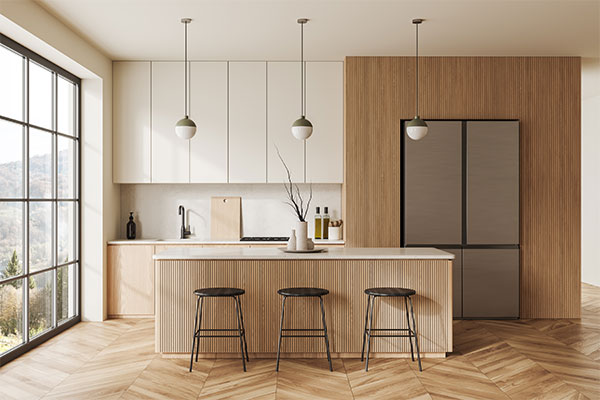
- The use-it-or-lose-it test: If you haven’t used a kitchen item in six months (allowing for seasonal variation), you probably don’t need it. That bread maker, juicer, or specialized pan collecting dust can find a better home with someone who’ll actually use it.
- Duplicate elimination: You don’t need six wooden spoons, three potato peelers, or multiple sets of measuring cups. Keep your favorites and donate the rest.
- Countertop clarity: Store appliances you use less than weekly. Clear counters make cooking easier, cleaning faster, and kitchens feel dramatically more spacious and calm.
- Dish minimalism: Most households could function perfectly with half their dishes, glasses, and mugs. Fewer dishes means less cupboard clutter and forces you to wash dishes more regularly, preventing sink pile-ups.
Bathrooms: Simplified Self-Care
Bathrooms accumulate half-used products, expired medications, and hotel amenity collections that create chaos in small spaces.
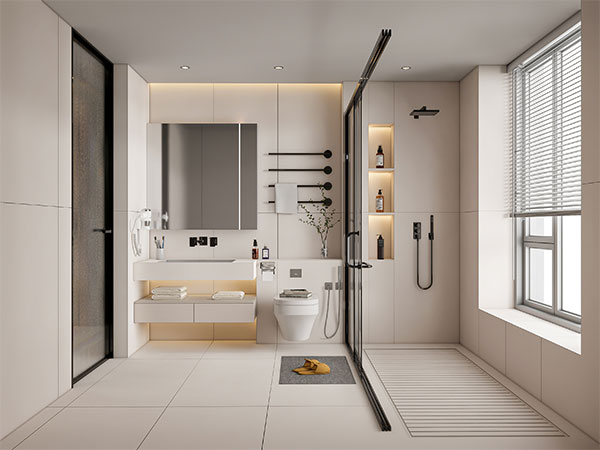
- Product audit: Check expiration dates, consolidate duplicates, and eliminate products you don’t actually like or use. The “I might use it someday” bathroom product never gets used—donate unopened items and toss the rest.
- Streamlined routines: Do you really need 17 skincare steps and 8 styling products? Simplify to what actually works for you. This saves money, time, and storage space while often improving results through consistency with fewer, better products.
- Medicine cabinet reality: Safely dispose of expired medications. Organize what remains so you can actually find what you need when you need it.
- Linen closet logic: Most households need far fewer towels and sheets than they keep. Two sets of sheets per bed and two towels per person covers needs while allowing for laundry cycles.
Beyond Physical Possessions: Simplifying Time and Commitments
True understanding of how to simplify your life extends beyond physical decluttering into simplifying your schedule, digital life, and mental space.
Calendar Minimalism
Your time is the ultimate non-renewable resource. Yet most people’s calendars are cluttered with obligations that add minimal value, taken on from guilt, habit, or inability to say no.
- Audit your commitments: List everything you’re currently committed to—work projects, volunteer roles, social obligations, children’s activities, personal projects. For each, ask: Does this align with my priorities? What would happen if I stopped? Am I doing this because I want to or because I feel I should?
- This audit often reveals that you’re spending enormous time on things you don’t even value. Give yourself permission to quit what doesn’t serve you. The freed time becomes available for what actually matters.
- The power of “no”: Every yes to something is a no to something else. Saying no to non-essential requests protects time for essential priorities. Practice polite but firm declining: “I appreciate you thinking of me, but I can’t take this on right now.”
- White space scheduling: Don’t pack every moment. Leave buffer time between commitments, open evenings, and unscheduled weekends. This flexibility reduces stress, allows for unexpected opportunities, and gives you room to breathe.
Digital Decluttering
Digital clutter creates stress and wastes time as surely as physical clutter, yet it’s often overlooked in simplification efforts.
- Email management: Unsubscribe ruthlessly from marketing emails you never read. Create simple folder structures and process email to zero daily. Promotional emails that you automatically delete without reading are just digital clutter filling your inbox.
- App minimalism: Most phones contain dozens of unused apps. Delete everything you haven’t used in a month. Disable notifications for non-essential apps. Every notification is an interruption demanding attention—protect your focus by allowing only truly important alerts.
- Photo organization: Thousands of unorganized photos create digital chaos. Regularly delete duplicates, blurry shots, and images you don’t care about. Organize what remains into albums. Consider printing favorites rather than keeping everything digital.
- Social media simplification: Unfollow accounts that create comparison, negativity, or FOMO. Your social media feed should add value, not drain it. Follow accounts that inspire, educate, or genuinely entertain you; unfollow everything else.
The constant pull of digital devices creates mental clutter that undermines the calm you’ve created through physical simplification. Implementing regular digital detox practices—designated tech-free hours, notification-free mornings, or weekly screen-free days—allows your mind to experience the same clarity your simplified spaces provide, breaking the scrolling habit that fragments attention and prevents the deep presence that minimalist living aims to cultivate while reclaiming time for activities that genuinely nourish rather than merely distract.
Mental Decluttering
The ultimate frontier of how to simplify your life involves clearing mental clutter—the worries, resentments, limiting beliefs, and endless mental loops that consume energy without producing value.
- Worry management: Most worries never materialize. For concerns you can influence, create action plans. For those outside your control, practice letting go. Writing worries down often reveals how unfounded or unlikely they are.
- Decision fatigue reduction: Simplify routine decisions through systems and habits. Steve Jobs famously wore the same outfit daily to preserve decision-making energy for important choices. While you needn’t go that far, reducing daily decisions through routines and templates frees mental energy.
- Information diet: Constant news consumption, social media scrolling, and information overconsumption create mental clutter. Curate information sources carefully. Schedule specific times for news rather than constant monitoring. Most information isn’t actionable or even important—it’s just mental noise.
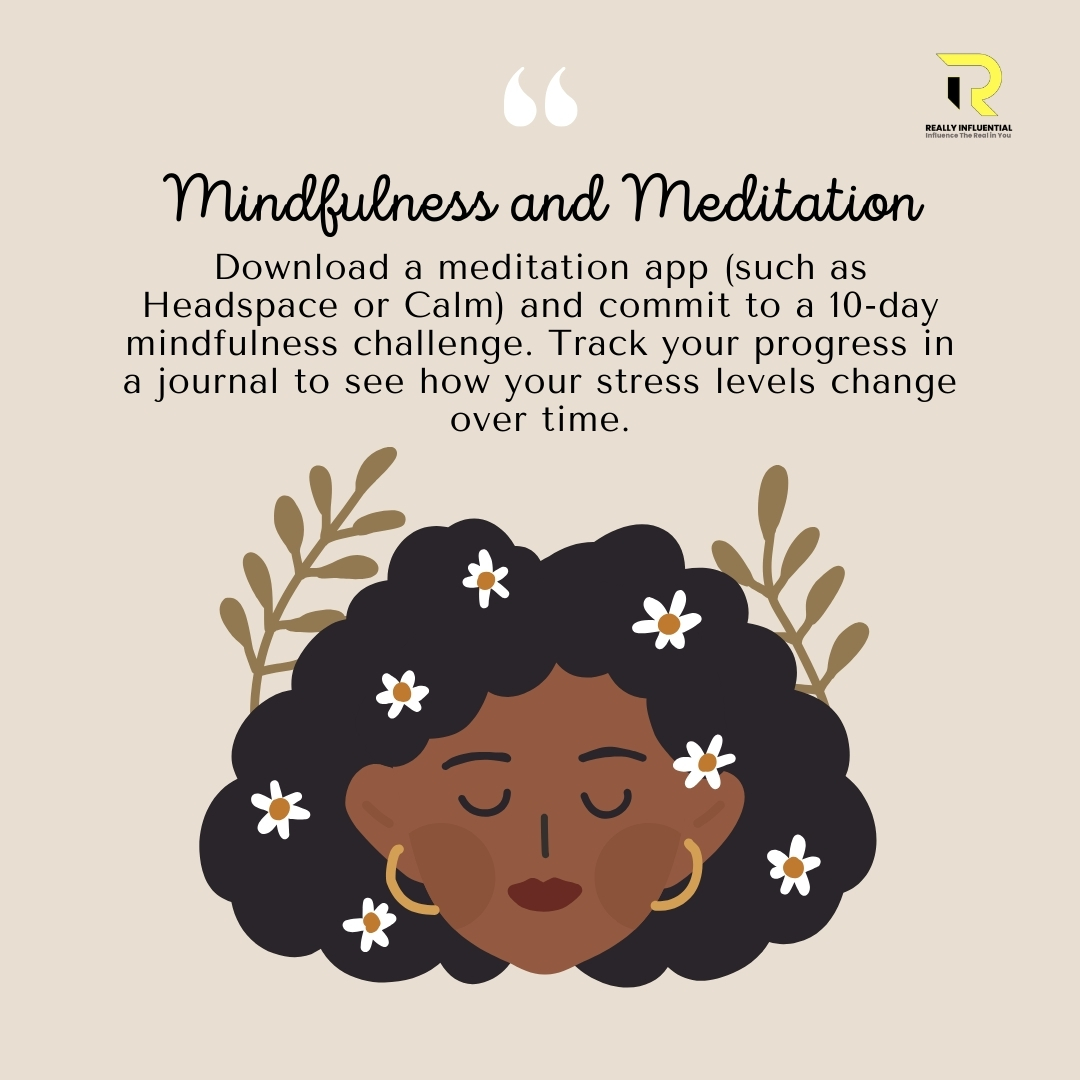
- Mindfulness practices: Meditation, journaling, or simple breathing exercises help quiet mental chatter. Even five minutes daily creates noticeable improvements in mental clarity and emotional regulation.
- Relationship simplification: Energy-draining relationships create mental and emotional clutter. This doesn’t mean abandoning everyone who’s going through tough times, but it does mean reconsidering relationships that consistently take more than they give.
Maintaining Minimalism: Making It Sustainable
Initial decluttering is one thing; sustaining simplified living requires different strategies and mindset shifts.
Regular Maintenance Routines
Minimalism isn’t a one-time project but an ongoing practice. Build regular review cycles into your life:
- Daily resets: Spend 10-15 minutes before bed returning items to their places. This prevents gradual clutter accumulation and ensures you wake to tidy spaces.
- Weekly reviews: Sunday evenings or Monday mornings, review your calendar for the week ahead. What can you simplify or eliminate? What needs preparation?
- Seasonal decluttering: Four times yearly, do quick sweeps of clothing, seasonal items, and accumulated papers. This prevents re-cluttering while staying manageable.
- Annual deep dives: Once yearly, revisit major categories—books, kitchen items, hobbies—asking whether your simplified systems still serve you or need adjustment.
Addressing Root Causes of Accumulation
Sustainable minimalism requires addressing why you accumulated excess in the first place. Common root causes include:
- Emotional shopping: Using purchases to manage stress, sadness, or boredom. Develop healthier coping mechanisms—exercise, social connection, creative outlets—that address emotions without creating clutter.
- Social pressure: Keeping up with others’ consumption. Remember that minimalism is about your values, not external comparison. What others own or do is irrelevant to what you need.
- Aspirational identity: Buying things for the person you wish you were rather than who you actually are. Release aspirational items and embrace your real interests and lifestyle.
- Fear of scarcity: Keeping things “just in case” often stems from scarcity mindset. Trust that you can acquire what you need when you need it. The cost of storing rarely-used items usually exceeds replacement cost if needed.
- Gift guilt: Keeping unwanted gifts out of obligation. Remember that the gift was in the giving; once given, you’re free to let it go. Someone else might genuinely love what you’re keeping from guilt.
Building Intentional Consumption Habits
Preventing re-accumulation requires changing consumption patterns:
- The 24-hour rule: Wait at least 24 hours before non-essential purchases. Most impulse-buy desire fades with time.
- Need vs. want clarity: Before buying, distinguish genuine needs from wants. Wants aren’t bad, but they should be conscious choices, not impulsive reactions.
- Cost per use calculation: For larger purchases, estimate cost per use. A $200 coat worn 200 times costs $1 per wear. A $50 coat worn twice costs $25 per wear. This math reveals true value.
- Quality research: When you do buy, research thoroughly. Better to spend more once on quality that lasts than repeatedly replace cheap items.
- Experience prioritization: Redirect money from possessions to experiences—travel, classes, concerts, activities with loved ones. Experiences create memories and growth that possessions rarely match.
Frequently Asked Questions
How do I start minimalism if I live with family members who aren’t interested?
Start with your personal spaces and belongings. You can’t force minimalism on others, but you can model its benefits. As family members notice your reduced stress, improved focus, and satisfaction, they may become curious. Focus shared spaces on function and beauty rather than forcing emptiness. Often, when one family member simplifies successfully, others naturally follow—but respect their autonomy to choose their own relationship with possessions.
What if I regret getting rid of something?
This fear keeps many people from simplifying, but the reality is that regret is rare and usually minor. In most cases, even when you do miss something you donated, the thing itself is replaceable—and the regret usually isn’t strong enough to warrant the cost, time, and effort of re-acquiring it. The freedom from clutter almost always outweighs occasional mild regret. If something is truly irreplaceable and meaningful, keep it. The point isn’t reckless purging but thoughtful curation.
How minimal is minimal enough?
There’s no universal answer. You’re minimal enough when your space and life feel light, intentional, and manageable to you. Some people thrive with very few possessions; others need more for their lifestyle, hobbies, or family size. The goal isn’t hitting some arbitrary number but finding your personal balance where you own enough to live well without excess that creates burden.
Can minimalism work with hobbies that require equipment?
Absolutely. Minimalism doesn’t mean eliminating hobbies—it means being intentional about them. If photography genuinely brings you joy and you actively practice it, your camera equipment isn’t clutter; it’s part of what makes your life meaningful. The question is whether you’re keeping gear for hobbies you’ve abandoned or buying equipment you never actually use. Keep what supports activities you genuinely engage in.
How do I deal with sentimental items I never use but can’t bear to part with?
For truly meaningful sentimental items, create a dedicated memory box or small display area. This honors their importance without letting them overtake your space. For items with sentimental attachment but minimal actual meaning, take photos before donating—you’re preserving the memory without the physical object. Ask yourself whether keeping something stored away really honors the memory more than passing it to someone who’ll use and enjoy it.
Does minimalism mean I can’t have nice things or enjoy luxury?
Not at all. Minimalism often means having fewer but nicer things. Instead of ten mediocre handbags, you might own two beautiful ones you absolutely love. Rather than a closet full of fast fashion, you curate quality pieces that fit perfectly and last years. Luxury and minimalism align beautifully when luxury means quality, craftsmanship, and items you genuinely treasure rather than status-driven accumulation.
How do I simplify without generating waste from all the stuff I’m getting rid of?
Prioritize donating usable items to charities, shelters, or community organizations. Sell higher-value items through consignment or online marketplaces. Offer items to friends and family. Recycle what you can. For items with no other option, dispose of them responsibly, but recognize that keeping clutter you don’t use doesn’t prevent waste—it just delays it while the items deteriorate in your home. The environmental impact of mindless consumption argues for minimalism, even if decluttering creates short-term disposal issues.
What’s the difference between minimalism and just being cheap?
Minimalism is about intentionality and quality of life; being cheap is about spending as little as possible regardless of value or impact. Minimalists might spend more on fewer, higher-quality items that last and bring joy rather than buying many cheap things. Minimalism considers the full cost—time, space, mental energy, environmental impact—not just price. Being cheap focuses only on financial cost, often resulting in lower quality that needs frequent replacement.
Conclusion
Learning how to simplify your life through minimalist principles isn’t about achieving some Instagram-perfect aesthetic or living with the bare minimum. It’s about creating space—physical, mental, temporal, and financial—for what genuinely matters to you by removing what doesn’t. The clutter filling our homes, schedules, and minds didn’t accumulate because we’re lazy or undisciplined; it accumulated because modern consumer culture constantly pushes more: more possessions, more commitments, more information, more comparison, more distraction. Minimalism is the conscious choice to step off that treadmill and define enough for yourself.
The journey toward simplification looks different for everyone because we all value different things, face different circumstances, and have different definitions of “essential.” The college student’s minimalism differs from the suburban parent’s, and both differ from the retiree’s—and that’s exactly as it should be. What matters isn’t adherence to some external standard but the intentional curation of a life that reflects your actual values rather than unconscious accumulation.
Start where you are with what you have. You don’t need to eliminate half your possessions this weekend or commit to owning exactly 100 things. You just need to begin asking better questions about what you bring into your life, what you keep, and how you spend your finite time and attention. The benefits—reduced stress, improved focus, financial freedom, better relationships, enhanced appreciation for what you do own—emerge gradually but profoundly as simplification becomes not just a one-time decluttering project but an ongoing practice of intentional living. Your simplified life awaits, and it’s more beautiful, peaceful, and authentically you than the cluttered alternative ever was.